


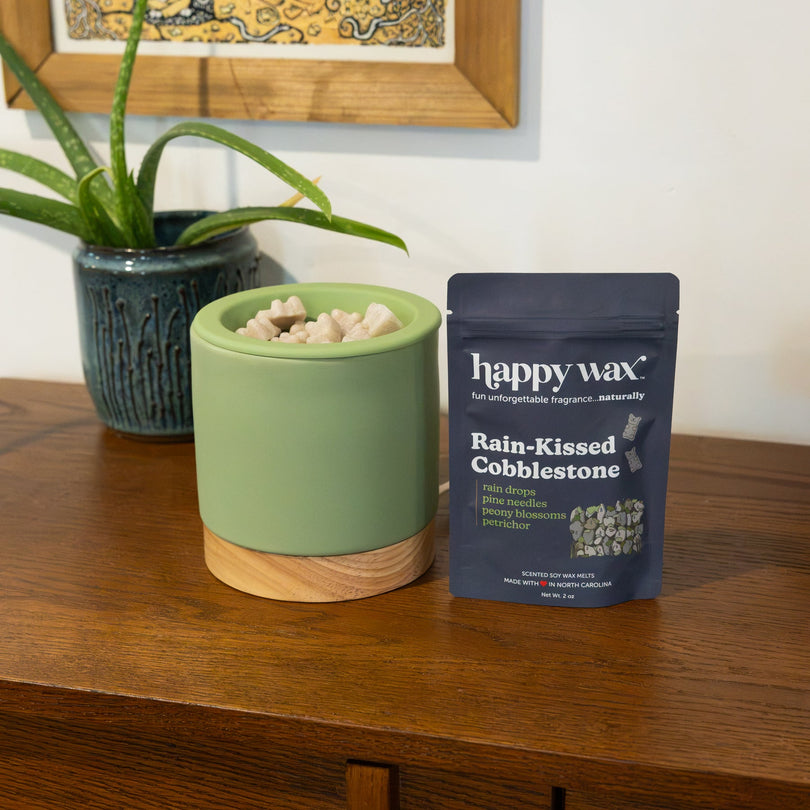




You pop a couple of wax melts into your warmer, take a deep breath, and think: pure heaven. Your roommate walks in, sniffs the air, and says, "Hmm, is that... soap?" Your best friend? She doesn't smell much at all.
Same wax melt. Three completely different experiences.
So what's going on? Is someone's nose broken? (Probably not.) The truth is far more fascinating and it comes down to some seriously cool biology happening inside your brain.
Your Nose Is Only Half the Story
When you inhale a scent, tiny airborne molecules float up through your nasal passage and land on a patch of tissue called the olfactory epithelium. This small but mighty scent-detection center tucked at the top of your nasal cavity houses millions of specialized cells called olfactory receptor neurons (ORNs).
Here's where it gets wild: humans have approximately 400 different types of olfactory receptors, each one designed to respond to specific molecular shapes. When a scent molecule "fits" into a receptor — kind of like a key sliding into a lock — it triggers an electrical signal that shoots straight to the brain.
Those signals travel to the olfactory bulb, which then routes information to two very important regions:
The limbic system, which controls emotion and memory (hello, nostalgia 👋)
The orbitofrontal cortex, which handles conscious identification — the part that says, "Oh! That's vanilla."
This is why scent is so uniquely tied to memory and emotion. It's the only sense with a direct line to the parts of the brain that process feelings. A whiff of something warm and spiced doesn't just smell like cinnamon — it feels like a cozy kitchen, a childhood holiday, a snow day. That's not imagination. That's neuroscience.
So Why Does the Same Scent Smell Different to Everyone?
Great question. A few big reasons:
1. Your Olfactory Receptors Are Unique to You
Here's something mind-blowing: the genes that code for your olfactory receptors vary from person to person. In fact, some researchers estimate that two people share only about 78% of the same functional olfactory receptor genes. That remaining 22%? It means you and your neighbor are literally sensing the world through different noses at a molecular level.
Some people have receptors that are highly sensitive to certain molecules; others may be missing those receptors entirely. This is why some people find certain floral scents intoxicating while others barely notice them — or why cilantro smells fresh and herby to most people, but like soap to others (yes, that's a real genetic thing).
2. Scent Adaptation and Desensitization
Your olfactory system is wired to detect change, not constants. When you're exposed to a scent for a prolonged period, your receptors essentially stop firing as frequently and your brain decides the smell is "background noise" and deprioritizes it. This is called olfactory adaptation (or what we call "scent fatigue" around here).
This is why you might not smell your own home's signature scent, even when guests walk in and immediately go, "Ooh, it smells amazing in here!" You're not broken! You've just adapted.
3. Memory and Emotional Associations
Because scent is processed directly through the limbic system, our personal history shapes how we perceive a smell. Not just whether we like it, but what we actually think it smells like. Two people smelling the same vanilla-based wax melt might describe it completely differently: one says "bakery," one says "sunscreen," one says "grandma's house." None of them are wrong. They're each pulling from their own unique scent-memory library.
4. Age, Hormones, and Health
Scent perception changes throughout our lives. Children often have more acute smell sensitivity. Hormonal shifts, like during pregnancy, can dramatically heighten or dull the sense of smell. Illness, medications, stress, and even zinc deficiency can all temporarily alter how we perceive scent. (If your wax melts suddenly smell "off" or weaker than usual, it might be worth paying attention to how you're feeling overall.)
5. Context and Expectation
Studies have shown that the label on a scent can change how people perceive it. In one famous experiment, the same smell was described more pleasantly when labeled "cheddar cheese" vs. "body odor" — even though the compound was identical. Our brains are constantly cross-referencing what we smell with what we expect to smell, and that shapes the final experience.
What This Means for Your Wax Melt Journey
All of this science points to one simple truth: there's no wrong way to experience a scent. If a fragrance that everyone raves about just isn't doing it for you, that's not a flaw, it's your unique olfactory fingerprint in action.
That's actually one of the reasons we created the Happy Wax Scent Quiz: because we know that scent preference isn't one-size-fits-all. Our quiz is designed to help you zero in on the fragrance families and notes that your nose loves most, so you spend less time guessing and more time enjoying.
And if you're ever in the mood to explore, our Discovery Kit is the perfect low-commitment way to test a range of scents and let your olfactory receptors do the talking.
The Takeaway
Your sense of smell is one of the most personal, powerful, and scientifically fascinating senses you have. From the unique genetic makeup of your olfactory receptors to the memories baked into your brain's limbic system, every sniff you take is a deeply individual experience. No two noses (or wax melt journeys) are exactly alike.
And honestly? We think that's pretty beautiful.